
Warning there are some spoilers in this blog post so best to read it after you’ve listened to the episode!

Above is the watermill stream, taken from Watermill Bridge aka Murder Bridge. It is the bridge which is on the bend just past Bedfordshire Growers on the B1040 Biggleswade Road. Here’s the Google street view of it in the winter.
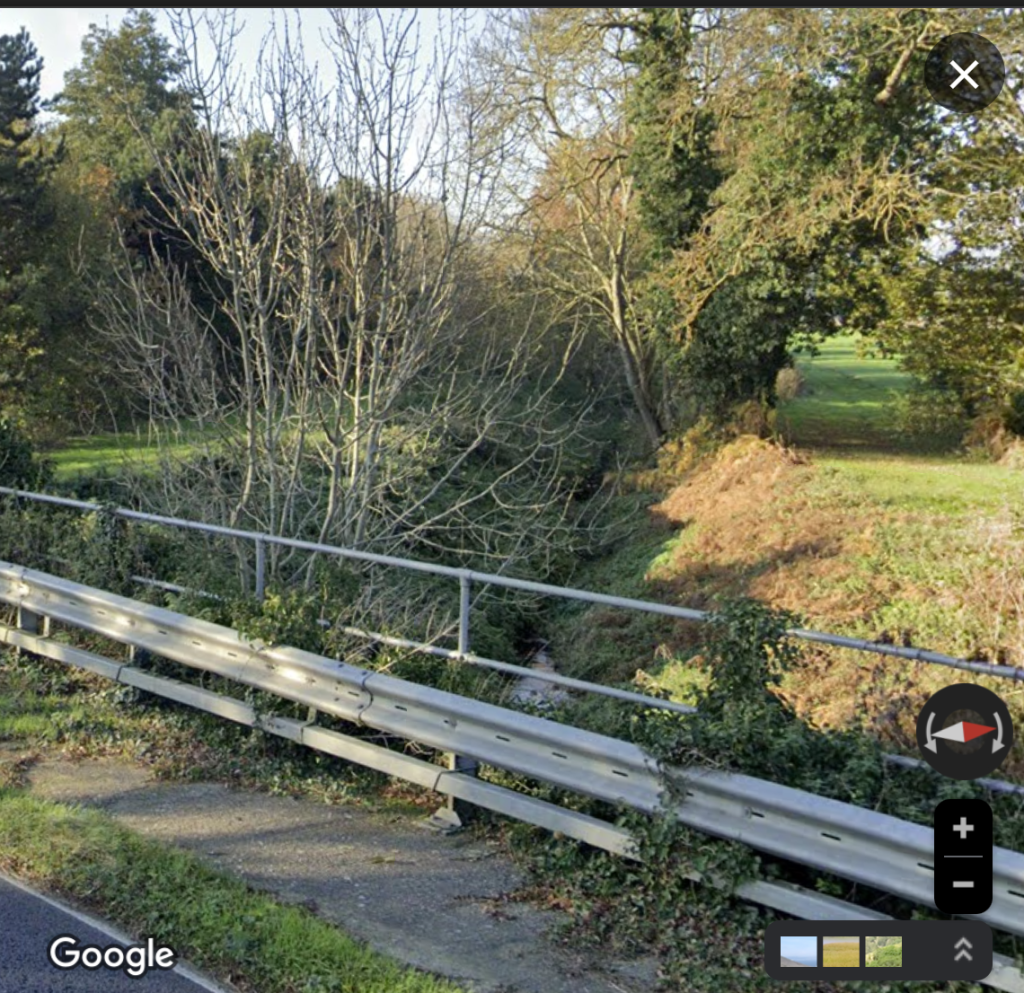
This is the bridge where Eliza Lawson was found beneath, drowned in 1857. The bridge its self would have looked different back then but as now was described as being “but a ditch” and shallow.
The bridge nearer to the hospital which is also often called murder bridge, is the one where a ghost was reported in 1922. Here are pictures of that bridge taken in the winter and the summer. As you can see the streams are very similar.
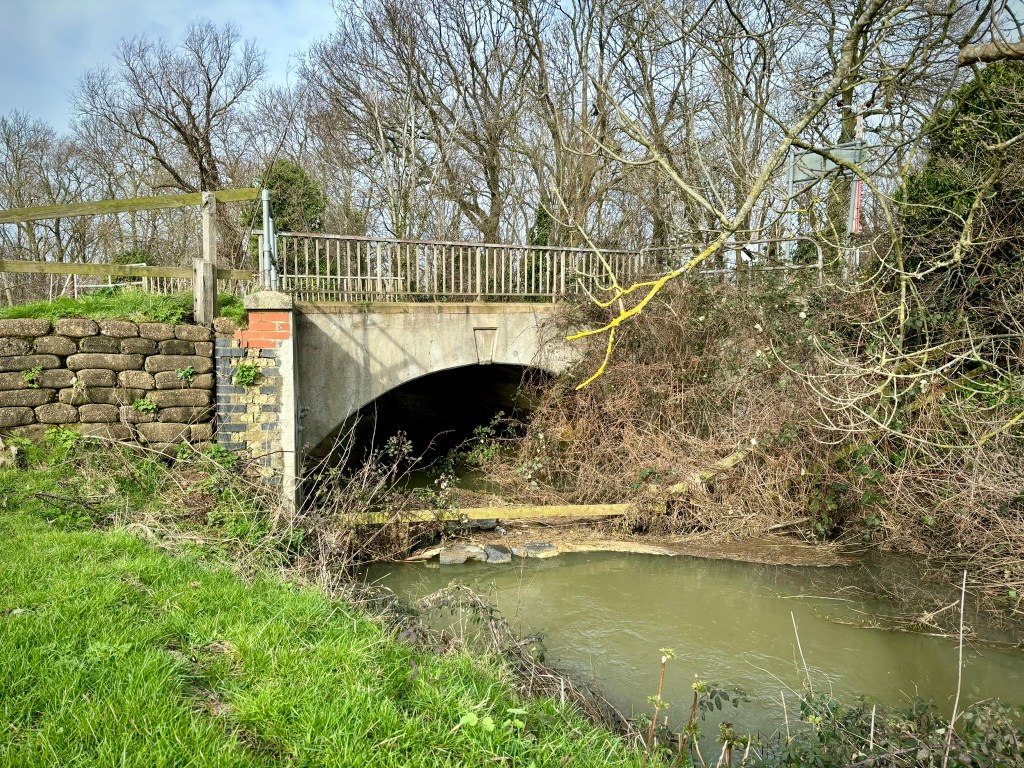
Here’s the Google street view of the bridge. You can see how similar it is to Water Mill bridge.


I took this photograph on the 25th June exactly 167 years and one day since Eliza Lawson was found drowned at the watermill bridge. I couldn’t get to watermill stream easily because there is no path along the road to it. So instead I took photos of the bridge nearer to the hospital.
I have no idea if the watermill stream back then was this overgrown. But if it was it might explain why it was deemed that it might have been difficult for her to climb out of the stream. And although Watermill brook looks narrower today than this stream near the hospital it may not have been quite so narrow back in 1857.

The area on the common is so overgrown that you can hardly see the path and gate next to the bridge.
So to be completely clear. The bridge nearest to the hospital is the one where ghosts were seen. But the bridge on the bend just past Bedfordshire Growers called Watermill Bridge is the one where Eliza Lawson drowned.
But the two stories were mixed and entangled thanks to John Francis Hunt and Mr Chandler the hospital board clerk.
In our next episode we’ll learn more about John Francis Hunt, spiritualism, and how it affected 19th and early 20th century society.


Hi Nat – late to the party but loving to binge-listen to WITW.
With the case of Eliza Lawson, I have two ideas that might support an accidental drowning verdict. For the first, have a watch of Suzannah Lipscomb on drowning in “Hidden Killers of the Tudor Home” (on YouTube from about 24:37). Although it’s produced in relation to a much earlier period that the 1850s, I think similar might apply. Eliza must have been attending the Free School for Girls, built in Sandy in 1840. School holidays were in July/August, so perhaps she was returning home after school that June evening — must be something in the records about the Free School’s daily schedule and where it was in relation to Eliza’s house and the bridge. There probably wasn’t a school uniform, but it would have been standard for children attending school to wear sturdy clothing — perhaps wool or fustian even in the summer. Those heavy fabrics would have got heavier in water, and muddy banks would make it more difficult to get out.
That brings me to the next idea. What were the rainfall and temperature like in June 1857? If it was a wet month, the water would have been higher in the ditch and the banks and bottom would have been muddier. If it was hot, that might be a reason to dip feet in after school. (There’s a post by LetItSnow on this page that shows that June 1857 being an especially hot and wet month in England but I don’t know how to check their source: https://community.netweather.tv/topic/101228-hot-wet-thundery-and-sunny-summer-months/page/3/)
LikeLiked by 1 person